

Choking and aspiration can happen quickly, but the events leading up to them may develop over days or weeks. A nursing home resident may begin coughing during meals, lose weight, develop a wet or gurgling voice after drinking, struggle with certain textures, or experience repeated respiratory infections. Those changes can signal a swallowing problem that deserves assessment and an individualized plan.
Older adults are more likely to have conditions that affect swallowing, including stroke, Parkinson’s disease, dementia, neurological illness, weakness after hospitalization, and other medical problems. Some residents also need direct assistance with eating or drinking. When those risks are known, the nursing home should not rely on guesswork. Staff should follow the resident’s current diet, swallowing precautions, positioning needs, supervision requirements, and treatment recommendations.
Not every episode of choking or aspiration pneumonia is caused by neglect. Even appropriate care cannot eliminate every risk. The more useful questions are whether the resident’s swallowing problems were recognized, whether recommended precautions were communicated and followed, and whether staff responded appropriately when symptoms changed.
Choking and Aspiration Are Not the Same Thing
Choking generally involves food or another object blocking the airway. A severe obstruction can become an immediate emergency because the person may be unable to breathe effectively.
Aspiration occurs when food, liquid, saliva, stomach contents, or another substance enters the airway instead of moving normally through the esophagus. Aspiration may trigger coughing, but it can also happen without an obvious cough. This is sometimes called silent aspiration.
Aspiration does not always cause pneumonia. When material containing bacteria reaches the lungs and an infection develops, the result may be aspiration pneumonia. A resident can also experience repeated small aspiration events before anyone recognizes that swallowing has become unsafe.
What Is Dysphagia?
Dysphagia is difficulty swallowing. It can affect the oral, pharyngeal, or esophageal phases of swallowing and may be temporary or long-term. In nursing homes, dysphagia may follow a stroke, neurological disease, surgery, prolonged illness, or a decline in strength and coordination.
Possible signs include:
- Coughing or throat clearing during or after meals
- A wet, gurgling, or changed voice after eating or drinking
- Food remaining in the mouth or cheeks after swallowing
- Difficulty chewing or moving food through the mouth
- Repeated swallowing or unusually long mealtimes
- Shortness of breath or difficulty coordinating breathing and swallowing
- Refusing certain foods or liquids that have become difficult to manage
- Unexplained weight loss, dehydration, or reduced food intake
- Recurring pneumonia or respiratory infections
A resident does not need to show every sign. Silent aspiration is particularly important because there may be no dramatic coughing episode. Staff must consider the resident’s diagnoses, prior history, observed changes, and clinical recommendations rather than assuming that the absence of coughing means swallowing is safe.
Swallowing Problems Should Trigger Assessment and Care Planning
When a resident develops signs of dysphagia, the appropriate response depends on the circumstances. Nursing staff may need to assess the resident, notify the practitioner, request a speech-language pathology evaluation, review medications, or obtain additional testing. The care plan should then reflect the resident’s actual needs.
Recommendations may address:
- The safest food texture and liquid consistency for that resident
- Whether the resident needs supervision or direct feeding assistance
- Seating and positioning during meals
- The pace of feeding and size of bites or sips
- Specific swallowing strategies recommended by the treating clinician
- Foods, liquids, straws, or techniques that should be avoided
- Oral care needs
- What staff should do if coughing, choking, voice changes, or breathing problems occur
These precautions should be available to the people actually providing care. A well-written speech therapy note is of little value if the dietary department serves the wrong texture, the nursing assistant is unaware of the precautions, or an agency worker feeds the resident without knowing that close supervision is required.
Texture-Modified Foods and Thickened Liquids
Some residents with dysphagia are prescribed softer, minced, pureed, or otherwise texture-modified foods. A clinician may also recommend liquids with a particular consistency. These interventions are intended to address the resident’s specific swallowing pattern; they are not interchangeable and should not be imposed as a generic precaution.
A nursing home should provide food in the form ordered for the resident and should update staff when recommendations change. Serving regular food to a resident who has been prescribed a modified texture can create avoidable risk. Overly restrictive diets can also create problems by reducing enjoyment, food intake, or hydration. Decisions about texture and liquid consistency should therefore be individualized and reviewed as the resident’s condition changes.
Feeding Assistance Must Match the Resident’s Needs
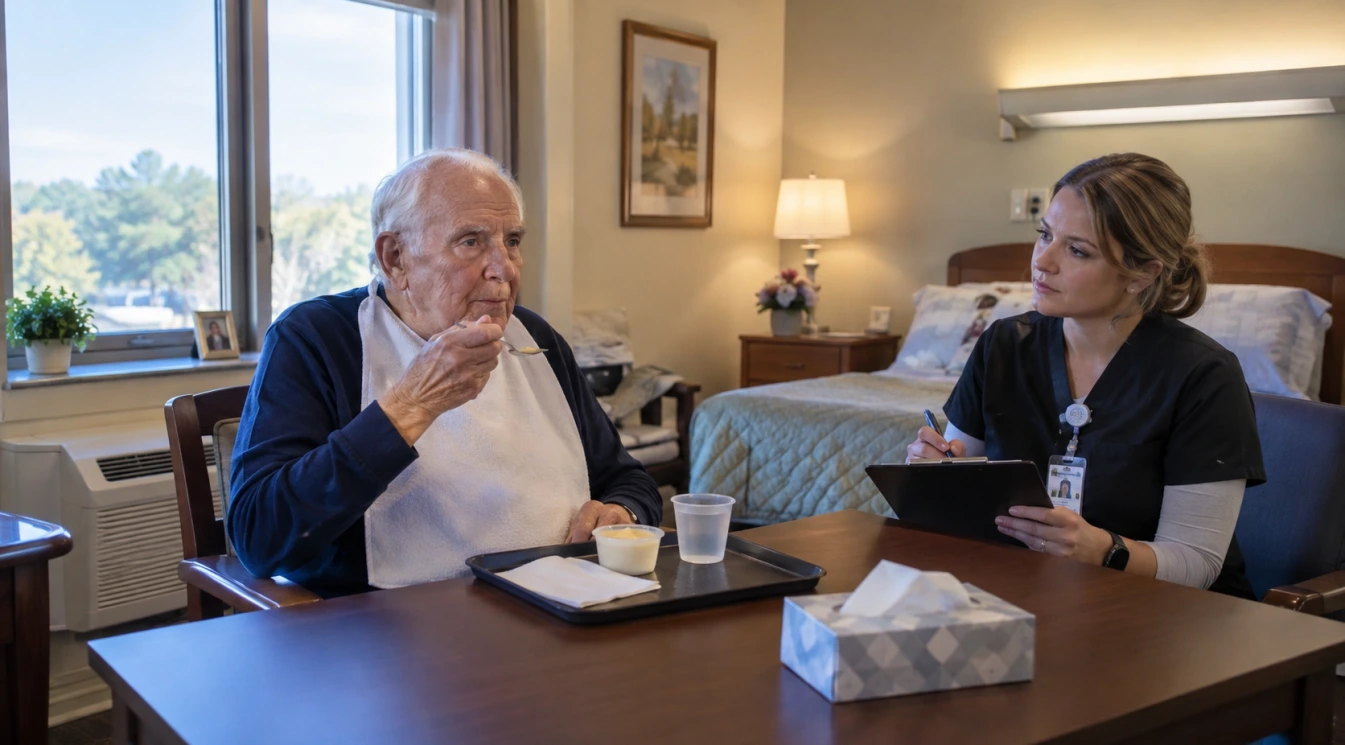
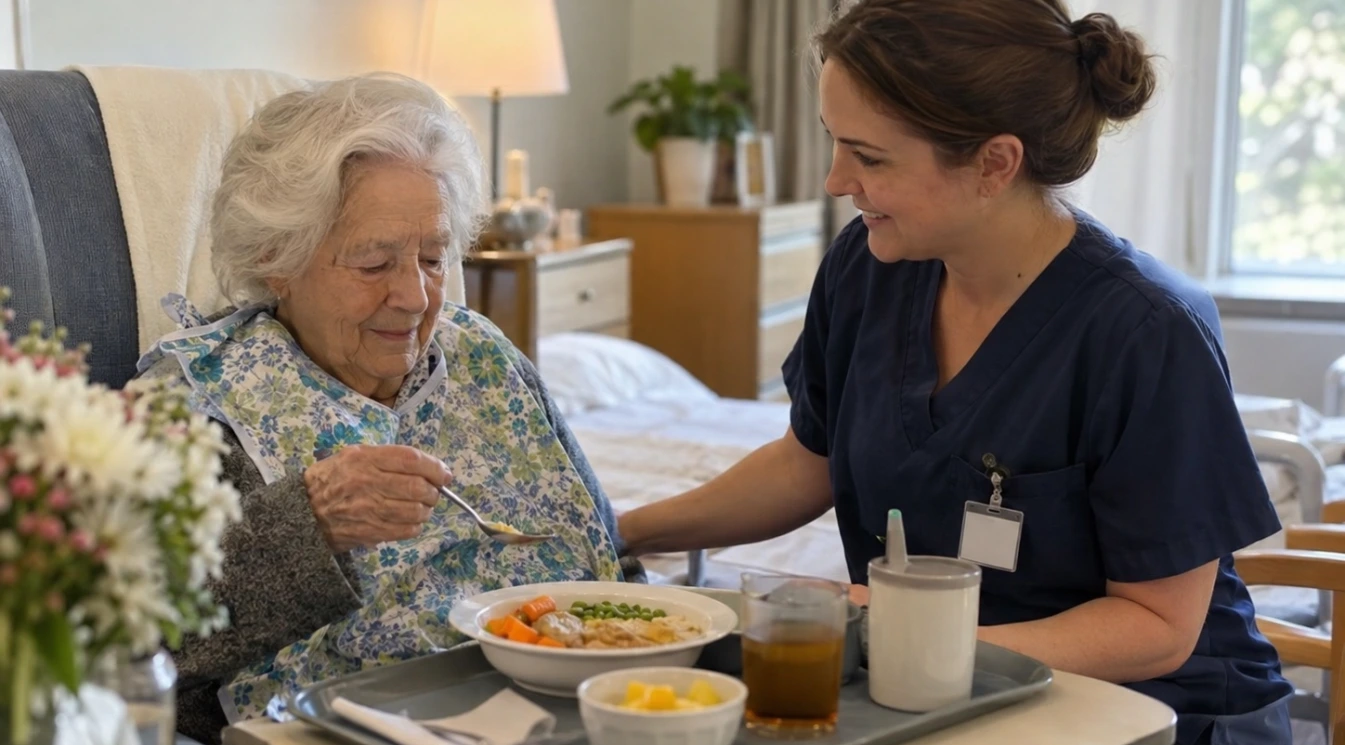
Residents who cannot safely eat independently may need cueing, setup assistance, close supervision, or direct feeding. The required level of help can change after illness, medication changes, stroke, hospitalization, or a decline in cognition or strength.
A resident who needs one-to-one assistance should not be left with a meal and expected to manage alone. Staff should also avoid rushing a dependent resident through a meal simply because the unit is busy. Feeding too quickly, failing to follow prescribed swallowing strategies, or giving food while a resident is poorly positioned can increase risk.
Staffing can become directly relevant. When too few trained employees are available at mealtimes, residents who need help may wait, eat without necessary supervision, or receive rushed assistance. Our article on nursing home understaffing in California discusses how staffing shortages can affect basic care that depends on time and attention.
Positioning During Meals and Tube Feeding
Positioning can be an important part of an individualized aspiration-prevention plan. Many residents are safer eating in an upright position, but the exact posture and any compensatory swallowing technique should come from the resident’s assessment and care plan rather than a universal rule.
For residents receiving nutrition through a feeding tube, aspiration risk does not disappear. Federal nursing home regulations specifically require appropriate treatment and services intended to prevent complications of enteral feeding, including aspiration pneumonia. CMS guidance also recognizes that factors such as positioning, level of consciousness, feeding rate, and tube placement may affect risk.
A facility should follow the practitioner’s orders, manufacturer requirements, and the resident’s plan of care. Staff should recognize vomiting, coughing, breathing changes, abdominal symptoms, or other signs that may require reassessment rather than continuing a feeding automatically.
Oral Care Can Matter in Aspiration Risk
Residents with swallowing problems may aspirate saliva and oral secretions as well as food and liquid. Poor oral hygiene can allow greater bacterial buildup in the mouth, which may increase the significance of aspiration when those secretions reach the lungs.
That does not mean routine oral care can prevent every case of aspiration pneumonia. Research on specific oral-care interventions is mixed, and pneumonia has multiple causes. Still, brushing teeth, cleaning dentures, addressing dry mouth, and providing needed oral hygiene are basic aspects of care that can be especially important for dependent residents who cannot perform them independently.
What Aspiration Pneumonia May Look Like
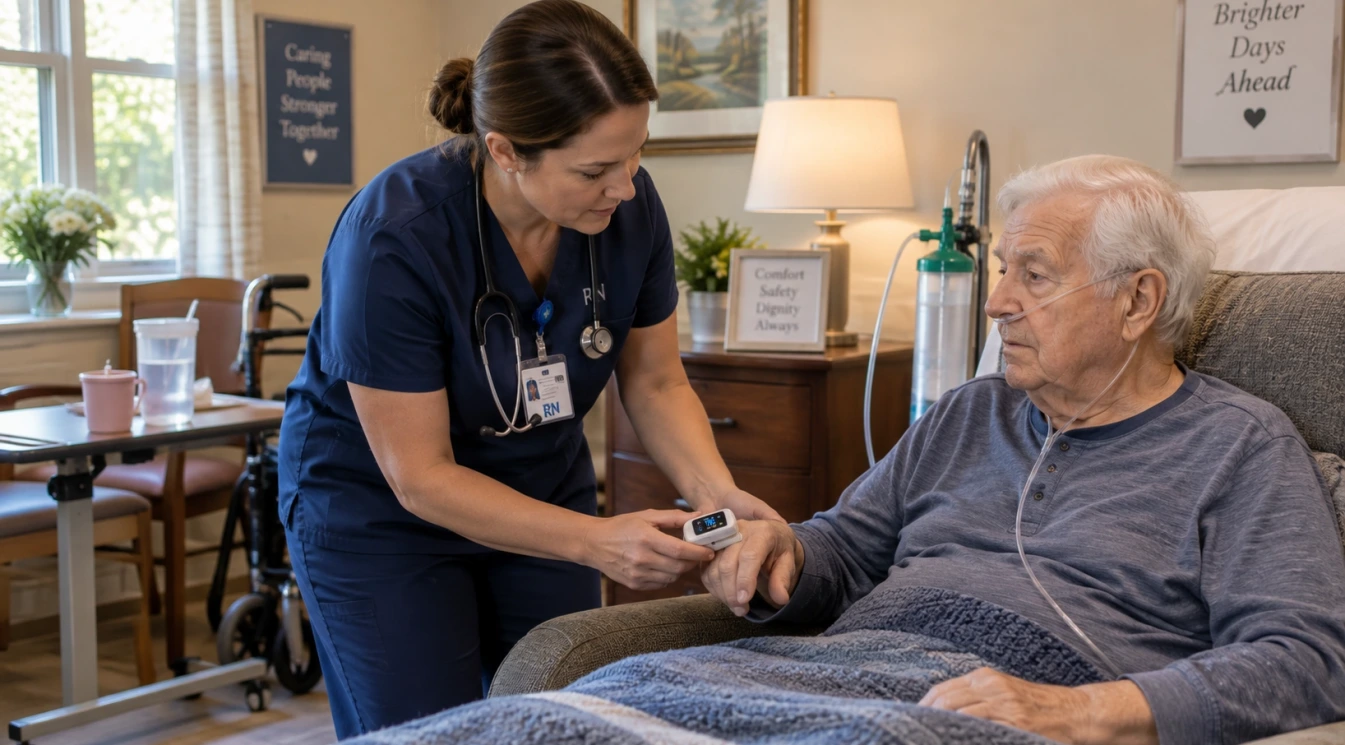
Aspiration pneumonia may not begin immediately after a dramatic choking event. Symptoms can develop later, and frail older adults may not present in the same way as younger patients.
Possible warning signs can include:
- New or worsening cough
- Shortness of breath or faster breathing
- Fever or other signs of infection
- New weakness, lethargy, or reduced alertness
- Lower oxygen readings than the resident’s usual baseline
- Chest congestion or abnormal breath sounds noted by clinical staff
- New confusion or a sudden decline from the resident’s normal condition
- Reduced appetite or difficulty finishing meals
These symptoms are not specific to aspiration pneumonia and require medical evaluation. Nursing home staff are not expected to diagnose every respiratory illness at the bedside, but they should recognize meaningful changes, assess the resident, communicate with the appropriate practitioner, follow new orders, and arrange additional care when necessary.
Our article on nursing home changes in condition and delayed medical care explains why the timing of assessment, notification, treatment, and transfer can become important when a resident begins to deteriorate.
Choking Requires an Immediate Response
Severe choking is different from a developing respiratory infection because an obstructed airway can become life-threatening within minutes. Nursing home staff should be trained to recognize an airway emergency, activate emergency response procedures, and provide appropriate first aid within the scope of their training while emergency medical assistance is obtained when needed.
After a choking episode, the facility should not simply return to the same meal routine without asking why it happened. Depending on the circumstances, the resident may need medical evaluation, a swallowing reassessment, a temporary change in oral intake, revised supervision, or other precautions before eating resumes.
When Choking or Aspiration May Point to Neglect
A bad outcome does not by itself prove negligent care. Choking and aspiration can occur despite reasonable precautions, particularly in residents with severe neurological disease or advanced swallowing impairment.
Concerns become more significant when the records show that the facility knew about a swallowing risk but failed to respond to it. Examples may include:
- A known dysphagia diagnosis that was not reflected in the care plan
- Repeated coughing or choking episodes without reassessment
- Serving food or liquids that did not match the current order
- Failure to provide required feeding assistance or supervision
- Ignoring speech-language pathology or dietary recommendations
- Feeding a resident in a manner inconsistent with documented positioning or pacing instructions
- Failure to communicate new swallowing precautions between shifts or departments
- Continuing oral feeding after a significant change without obtaining needed clinical review
- Delayed response to respiratory symptoms after a suspected aspiration event
- A pattern of understaffing that repeatedly interfered with safe mealtime care
The key issue is usually not whether one employee made a perfect decision in a single moment. The larger question is whether the nursing home assessed foreseeable risks, communicated the plan, provided adequate assistance, recognized changes, and revised care when the resident’s condition required it.
Records That Can Help Reconstruct What Happened
When a resident is hospitalized after choking or aspiration pneumonia, several records may help clarify the timeline:
- Admission and significant-change assessments
- Speech-language pathology evaluations and treatment notes
- Swallow-study reports when performed
- Diet orders and dietary change records
- Care plans and swallowing precautions
- Nursing and certified nursing assistant notes
- Meal intake and hydration records
- Medication records, particularly when sedation or alertness may be relevant
- Incident reports involving choking or suspected aspiration
- Vital signs, oxygen readings, respiratory assessments, and practitioner notifications
- Hospital, ambulance, imaging, and laboratory records
- Staffing schedules and assignments for the relevant meals and shifts
Families can also preserve messages, dated notes, names of witnesses, and information about what foods or liquids were served. Our guide to preserving evidence after suspected nursing home abuse or neglect explains how to document concerns without interfering with medical care.
When a Nursing Home Aspiration Case May Need Legal Review
A legal review typically looks beyond the diagnosis of aspiration pneumonia itself. Relevant questions include whether the resident had known dysphagia, what precautions were ordered, whether those precautions were actually followed, whether staffing and training were adequate, and whether delays in recognizing or treating the resident’s decline contributed to additional harm.
Newman Law Group represents residents and families in cases involving nursing home abuse and neglect, including failures to provide appropriate supervision, feeding assistance, medical follow-up, and other necessary care.
Contact Newman Law Group to discuss a serious choking or aspiration-related concern, or call 9169320397.
This article provides general legal and medical information and is not advice for a particular situation. Choking, breathing difficulty, or a sudden decline can require immediate medical attention. A qualified health professional should evaluate suspected dysphagia, aspiration, or pneumonia.