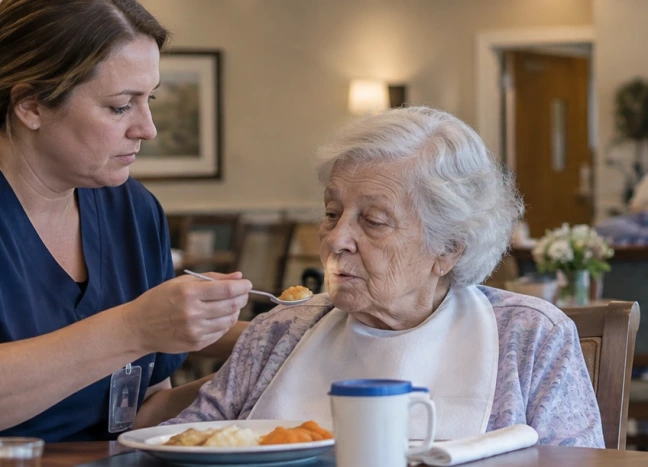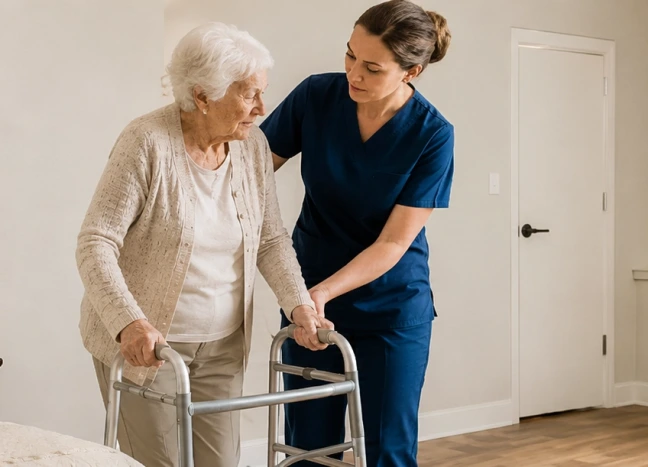

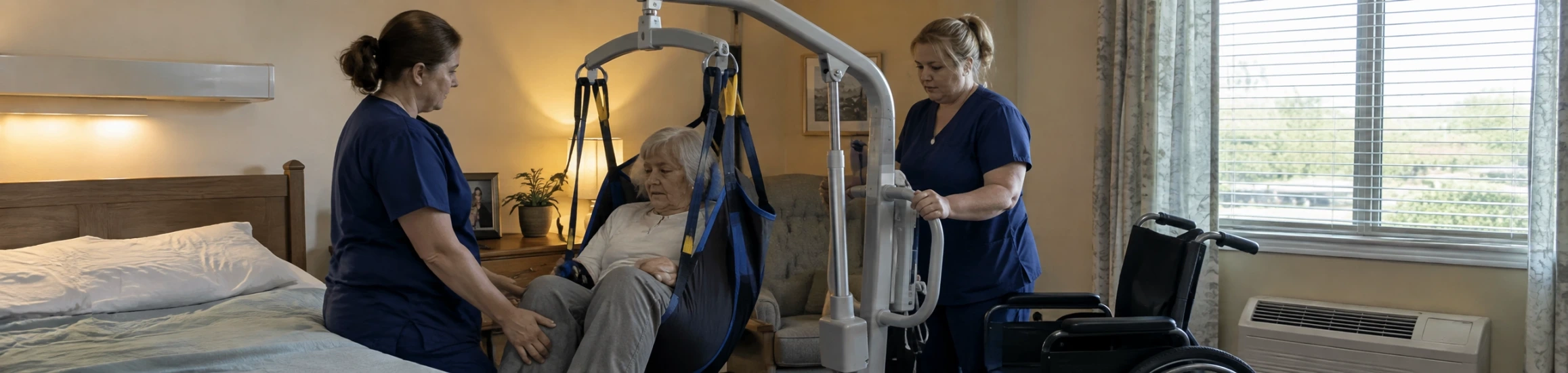
Transfers are a routine part of nursing home care, but they can become dangerous when a resident cannot safely move without help. A resident may need assistance moving from a bed to a wheelchair, from a wheelchair to a toilet, into a shower chair, or back into bed. For residents who cannot bear enough weight to transfer safely, staff may use a mechanical patient lift, often referred to generically as a Hoyer lift.
Mechanical lifts are intended to reduce the physical strain of moving dependent residents and can make transfers safer when the right equipment, sling, staffing, and technique are used. Problems can arise when the resident is assessed incorrectly, the wrong device is selected, the sling is attached improperly, staff are not trained, required assistance is unavailable, or damaged equipment remains in service.
Not every transfer injury proves neglect. Residents may have fragile bones, severe weakness, involuntary movements, or medical conditions that make even carefully performed transfers difficult. The important questions are whether the nursing home identified the resident’s transfer needs, provided appropriate equipment and trained staff, followed the care plan and equipment instructions, and responded appropriately when the resident’s condition changed.
What Is a Hoyer Lift?
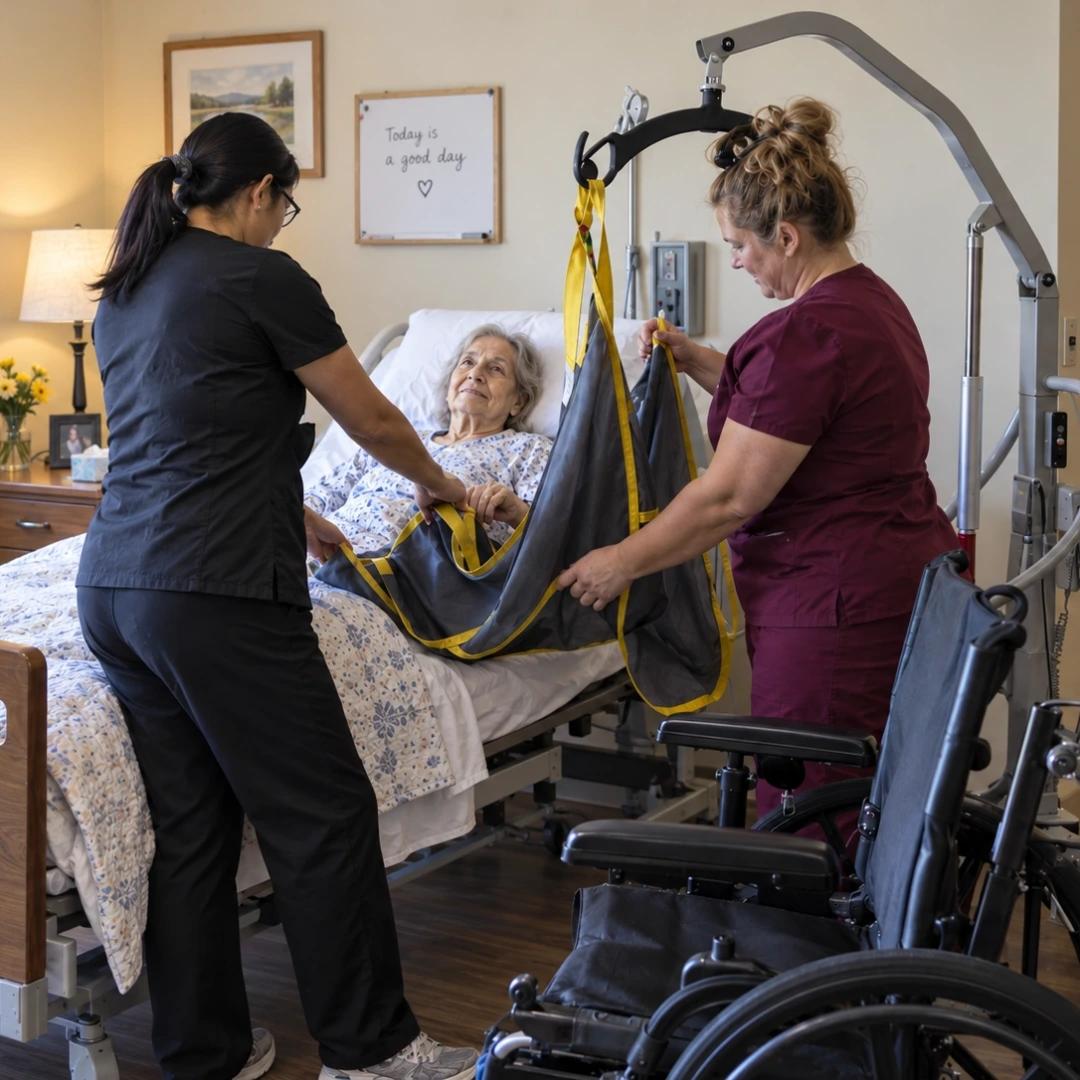
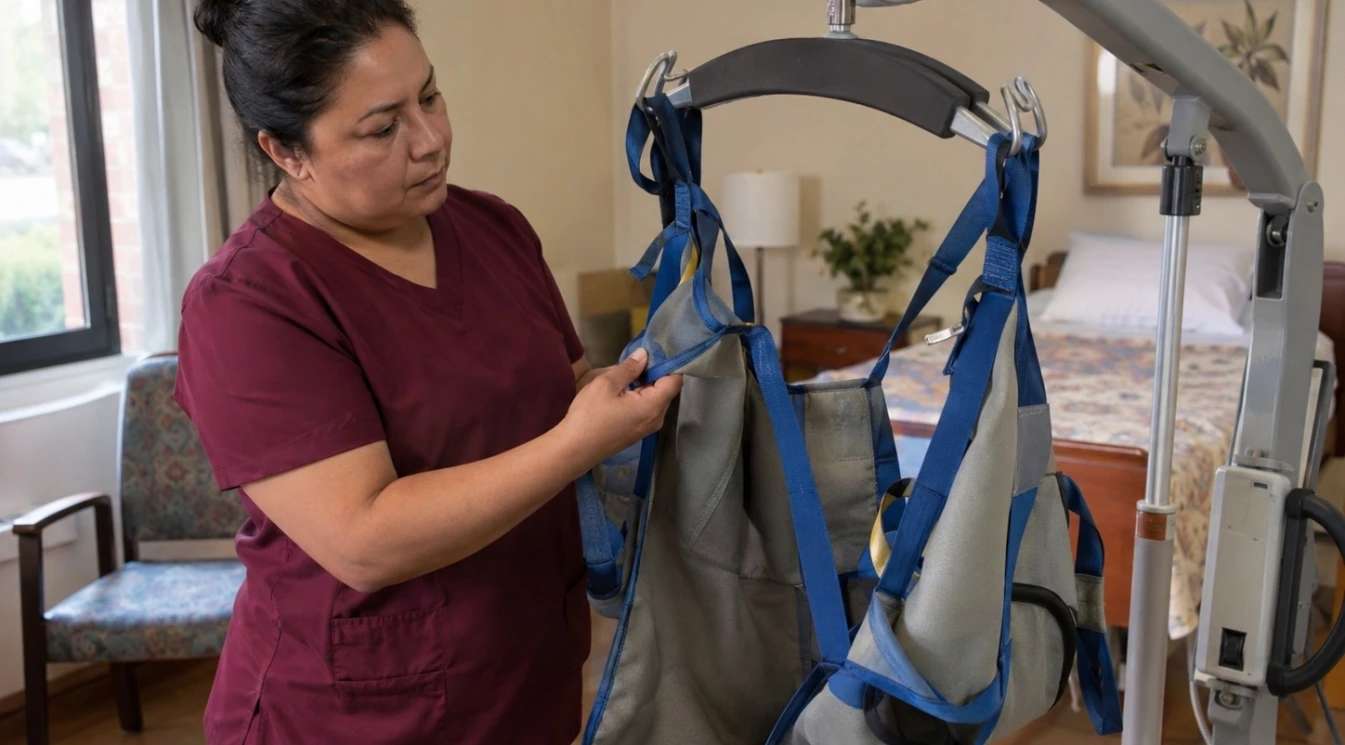
“Hoyer lift” is commonly used as a general term for a mechanical patient lift, although Hoyer is also a brand name. A full-body mechanical lift typically uses a sling placed around or beneath the resident. The sling attaches to a lifting bar, and the lift raises the resident so staff can move the person between surfaces without manually carrying the resident’s full weight.
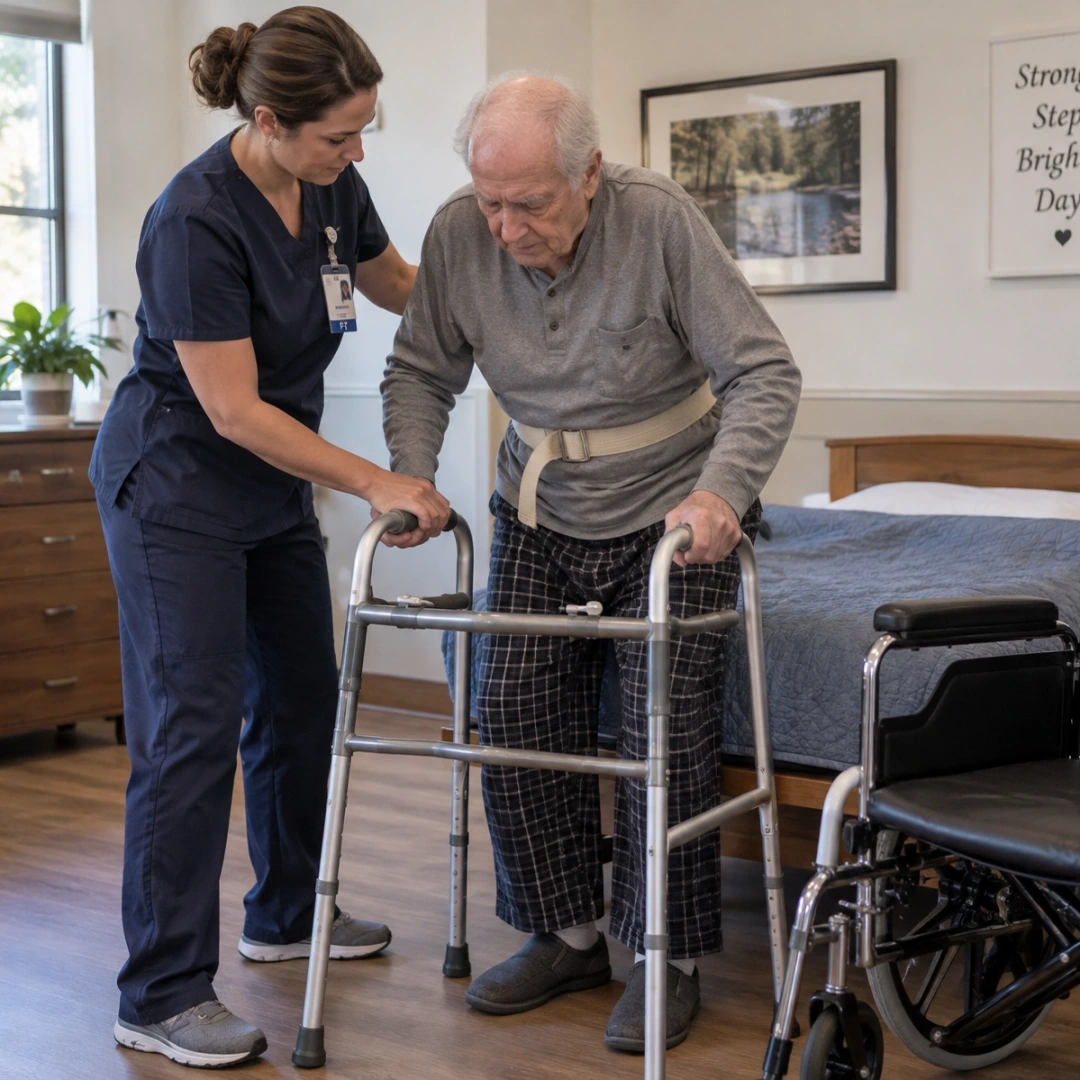
Other transfer devices include sit-to-stand lifts, ceiling-mounted lifts, transfer boards, gait belts, and powered standing-assist devices. The appropriate method depends on the resident’s ability to bear weight, follow instructions, maintain balance, use the arms and legs, and tolerate the transfer safely.
A resident who could previously stand and pivot with assistance may later need a mechanical lift after a stroke, hospitalization, fracture, infection, or decline in strength. The opposite can also happen during rehabilitation: a resident may improve enough to use a less restrictive transfer method. Transfer status should therefore reflect the resident’s current condition rather than an outdated routine.
Federal Nursing Home Rules Require Safe Transfer Practices
Federal nursing home regulations require facilities to keep the resident environment as free of accident hazards as possible and to provide adequate supervision and assistive devices to prevent accidents. CMS survey guidance specifically recognizes mechanical lifts, sit-to-stand devices, and gait or transfer belts as assistive devices used during resident transfers.
The guidance explains that the resident assessment helps determine the proper transfer method, including whether one or more caregivers or a mechanical device is needed. It also identifies staff availability, resident abilities, staff training, and staff competency as factors that can affect transfer safety.
CMS survey guidance uses a mechanical-lift accident as an example of serious noncompliance involving staff competency: a resident suffered an injury requiring hospitalization and surgery after falling from a mechanical lift during an unsafe transfer by one staff member who was unfamiliar with the equipment. The example does not mean that every one-person lift transfer is automatically improper. It illustrates why the resident’s assessed needs, the care plan, and the equipment’s safe-use requirements must be matched with competent staff.
Does a Hoyer Lift Always Require Two Staff Members?
There is no simple rule that every mechanical-lift transfer in every nursing home always requires exactly two employees. The amount of assistance can depend on the resident’s condition, the type of lift, the manufacturer’s instructions, the facility’s policies, and the resident’s care plan.
OSHA guidance for nursing homes notes that more than one caregiver may be needed for resident lifting. Its sample transfer algorithm uses two caregivers with a full-body sling lift in several common scenarios involving residents who cannot safely complete a transfer with less assistance. In an individual facility, the resident’s care plan may specifically call for a two-person mechanical-lift transfer.
If the plan requires two trained employees, one employee should not improvise a solo transfer because the unit is busy or another staff member is unavailable. Likewise, adding extra employees does not make an unsafe transfer safe if the wrong sling is used, the equipment is defective, or the staff members do not know how to operate it.
The Resident’s Transfer Status Should Be Assessed and Updated
Safe transfer planning begins with an accurate assessment. Relevant factors may include:
- Whether the resident can bear full, partial, or no weight
- Balance and trunk control
- Ability to follow instructions and cooperate with the transfer
- Range of motion and joint limitations
- Recent fractures, surgery, wounds, or pain
- Weakness on one side after a stroke
- Cognitive impairment, fear, agitation, or involuntary movement
- Resident size and the weight capacity of the equipment
- Whether the resident can safely use a sit-to-stand device rather than a full-body lift
- The number of staff members needed for the selected method
A transfer plan should be communicated to the nursing assistants and other staff who actually move the resident. If the resident’s condition changes, the transfer method may need to change as well. Continuing yesterday’s transfer routine after a new fracture, hospitalization, neurological event, or major decline can create avoidable risk.
Using the Correct Sling Matters
Mechanical lifts rely on a sling to support the resident’s body. Slings come in different designs and sizes, including full-body, toileting, bathing, and other specialized configurations. The appropriate sling depends on the lift, the resident, and the transfer being performed.
Problems can arise when staff:
- Use a sling that is too large or too small
- Attach loops or straps to the wrong points
- Use a sling that is not compatible with the lift
- Fail to inspect the sling for tears, fraying, damaged stitching, or worn attachment points
- Position the sling incorrectly under the resident
- Use equipment beyond its rated weight capacity
- Leave the resident poorly supported during lifting or lowering
Manufacturer instructions and facility procedures should guide how the sling and lift are used. A mechanical lift can only reduce risk when its components are suitable for the resident and used correctly.
Equipment Must Be Available, Working, and Maintained
Safe patient-handling equipment can reduce risk only when it is available, functional, appropriately matched to the resident, and accessible when needed. OSHA guidance emphasizes having suitable lifting equipment and supplies available and maintaining mechanical devices in usable condition.
CMS survey guidance also treats defective or improperly used assistive devices as possible accident hazards. Mechanical problems that can affect a transfer may include malfunctioning controls, damaged casters, worn sling attachments, battery problems, unstable bases, or lift components that do not operate as intended.
After an accident involving a lift that allegedly slipped, stopped, tipped, failed to lower, or otherwise malfunctioned, maintenance and repair records may help clarify whether an equipment problem contributed to what happened.
Staff Training and Competency Are Central to Transfer Safety
Mechanical lifts should not be treated as self-explanatory equipment. Staff need to understand how to select and position the sling, attach it correctly, operate the lift, communicate with the resident, manage the wheelchair or bed, and respond if something goes wrong.
Competency matters because the same lift may be used for residents with very different abilities. A staff member who has watched another employee use the device is not necessarily prepared to perform every transfer safely.
Agency or temporary staff may be unfamiliar with a resident’s current transfer status or with equipment used at a particular facility. Federal nursing-service requirements still call for nursing personnel to have the competencies and skills needed to meet residents’ assessed needs and carry out their care plans.
Common Ways Nursing Home Transfer Injuries Occur
Transfer accidents can happen in many ways. Examples include:
- A resident slips from the sling
- The sling may be positioned incorrectly, improperly attached, or unsuitable for the resident.
- The resident is dropped during a manual transfer
- Staff may attempt a stand-pivot or other manual transfer even though the resident requires more assistance or a mechanical device.
- A wheelchair moves during the transfer
- Brakes, footrests, armrests, or chair positioning can affect transfer safety.
- The resident strikes nearby furniture or equipment
- Poor positioning or inadequate space can cause contact with a bed frame, lift, wall, wheelchair, or bathroom fixture.
- The lift or sling fails
- Defective, damaged, incompatible, or poorly maintained equipment can create serious risk.
- The resident becomes frightened or resists the transfer
- CMS notes that fear during a mechanical-lift transfer can lead to resistance movements that increase accident risk.
Clear communication also matters. Explaining the transfer before it begins, moving at an appropriate pace, and responding to pain or fear can improve both safety and dignity.
What Injuries Can Result From an Unsafe Transfer?
A resident who falls or is struck during a transfer may suffer a hip fracture, pelvic fracture, arm or shoulder injury, head injury, bruising, skin tears, pain, or loss of mobility. Frail residents with osteoporosis may be injured by forces that would cause much less harm to a younger person.
An injury may also have consequences beyond the initial trauma. A resident who becomes afraid of mechanical lifts after an accident may resist getting out of bed, participate less in therapy, or lose confidence with mobility. Reduced movement can contribute to deconditioning and greater dependence.
Our article on nursing home falls and preventable neglect discusses the broader issues that arise when residents fall during transfers, toileting, walking, and other daily activities.
The Response After a Transfer Accident Matters
If a resident falls from a lift, is dropped, or develops significant pain during a transfer, the absence of an obvious deformity does not necessarily rule out injury. The appropriate response depends on the circumstances and the resident’s condition. Clinical assessment may lead to additional monitoring, practitioner notification, diagnostic imaging, or hospital evaluation when indicated.
OSHA’s nursing-home ergonomics guidance also cautions that a resident should be assessed for injury before being moved after a fall. The facility should then examine why the transfer failed and whether the care plan, equipment, staffing, or technique needs to change before the next transfer.
Repeating the same transfer method after an accident without examining what went wrong can leave the resident exposed to the same hazard again.
When Staffing Shortages Affect Transfers
Transfers are woven into daily care. Residents may need help getting out of bed, using the toilet, bathing, attending meals, and participating in therapy. When staffing is inadequate, employees may feel pressure to hurry or perform a transfer without the assistance called for in the care plan.
That can lead to shortcuts such as attempting a two-person transfer alone, using a manual transfer because the lift is unavailable, skipping equipment checks, or leaving a resident waiting for long periods because no trained second employee is available.
Our article on nursing home understaffing in California explains how staffing shortages can affect routine care that requires adequate time, supervision, and trained personnel.
Records That May Help Explain a Transfer Injury
When a resident is injured during a transfer, useful records may include:
- Admission and significant-change assessments
- The care plan and current transfer status
- Physical and occupational therapy evaluations
- Nursing and certified nursing assistant notes
- Incident reports and post-fall assessments
- Hospital, imaging, and emergency medical records
- Lift and sling manufacturer information
- Equipment maintenance and repair records
- Staff training and competency records
- Staffing schedules and assignments for the shift
- Photographs of the equipment, sling, or surrounding area when available
- Witness statements or communications with the family
Records can help determine whether the resident required one person, two people, a sit-to-stand device, or a full-body lift; whether staff followed that plan; and whether the equipment was functioning properly. Our guide to preserving evidence after suspected nursing home abuse or neglect explains other information that may be useful after a serious incident.
When a Hoyer Lift or Transfer Injury May Point to Neglect
A transfer injury does not automatically establish nursing home neglect. The circumstances need to be examined. Concerns become more significant when evidence shows that the facility knew what assistance the resident required but failed to provide it.
Examples can include:
- The care plan required two staff members but only one performed the transfer
- Staff manually transferred a resident who was assessed as requiring a mechanical lift
- The employee operating the lift had not been trained or demonstrated competency
- The wrong sling or an incompatible attachment was used
- Known equipment problems were not repaired before the lift was used again
- The resident’s transfer status changed but the care plan was not updated or communicated
- Staff ignored pain, fear, or physical limitations during the transfer
- A prior transfer accident occurred without meaningful reassessment or corrective action
Those facts may raise questions about supervision, training, staffing, care planning, equipment maintenance, or failure to follow the resident’s assessed needs.
Legal Review of a Nursing Home Transfer Injury
A legal review generally looks beyond the fact that a resident fell from a lift or was injured during a transfer. Relevant questions can include what the resident’s assessment required, whether staff followed the care plan, whether the equipment was appropriate and functioning, how many trained caregivers were present, and whether earlier warning signs or equipment problems had been documented.
Newman Law Group represents residents and families in matters involving nursing home abuse and neglect, including unsafe transfers, preventable falls, inadequate supervision, understaffing, and failures to follow care plans.
Contact Newman Law Group to discuss a serious nursing home transfer injury, or call 9169320397.
This article provides general legal and safety information and is not advice for a particular situation. Transfer methods and staffing needs should be determined by qualified professionals based on the resident’s condition, the care plan, and the equipment being used.