
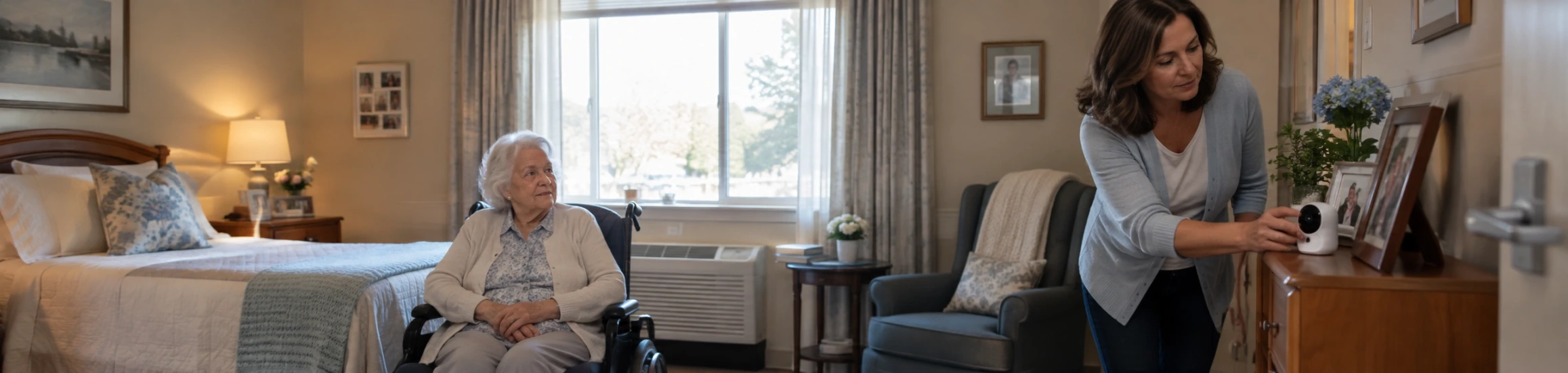
Families sometimes consider placing a camera in a nursing home room after noticing unexplained injuries, changes in behavior, missing belongings, delayed care, or conflicting explanations from staff. A camera may help a family understand what is happening between visits, but California law does not reduce the issue to a simple yes-or-no rule.
In a skilled nursing facility, the resident’s own wishes and privacy rights matter. So do the privacy rights of a roommate, visitors, and people who may have confidential conversations in the room. Audio recording raises a separate concern because California law generally requires the consent of all parties before a confidential communication is recorded.
As of 2026, California does not appear to have a single statute or statewide CDPH rule written specifically for resident-installed video cameras in skilled nursing facility rooms. As a result, the analysis can involve resident rights, privacy law, facility policy, roommate interests, audio-recording rules, and the way the device is actually used.
This article provides general information about those issues. It is not legal advice about whether a particular camera, recording, or facility policy is lawful.
Video Monitoring and Audio Recording Are Different Issues
Video-only monitoring and audio recording should not be treated as the same issue. Many consumer security cameras, baby monitors, and “nanny cams” record both video and audio by default, so families may not realize that a microphone is active.
California Penal Code section 632 generally prohibits intentionally recording a confidential communication without the consent of all parties to that communication. The statute defines a confidential communication as one made under circumstances that reasonably indicate that a party expects the conversation to remain limited to the people involved.
A nursing home room can host conversations about medical care, personal matters, finances, family issues, and other topics that may reasonably be considered private. Disabling the microphone can remove one major recording-law issue, but it does not by itself resolve questions about video privacy.
Notice that recording is taking place can affect whether someone reasonably expects a conversation to remain private, but a posted sign should not be assumed to resolve every consent issue. Whether a particular audio recording is lawful can depend on the circumstances.
Residents Keep Privacy Rights After Entering a Nursing Home
Moving into a nursing home does not mean giving up the right to privacy. Federal regulations give residents a right to personal privacy and confidentiality. That protection includes accommodations, medical treatment, personal care, visits, and oral, written, and electronic communications.
Federal rules also recognize a resident’s right to retain and use personal possessions, including furnishings, as space permits, unless doing so would infringe on the rights or health and safety of other residents.
Those rights can point in different directions when a camera is involved. A resident may want a personal camera in the room, while a roommate may reasonably object to being recorded. The facility may also have legitimate concerns about privacy during bathing, dressing, toileting, wound care, examinations, or other personal care.
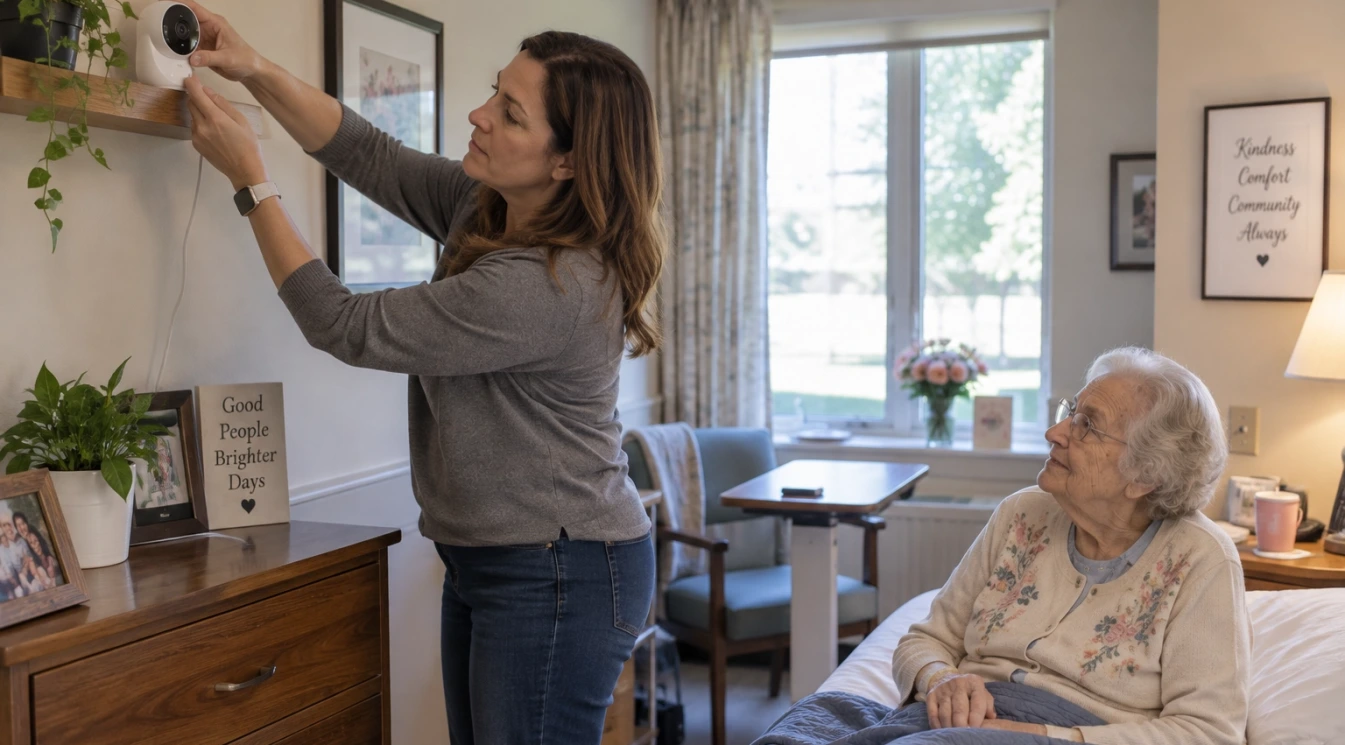
The Resident’s Consent Is Important
If the resident has decision-making capacity, the resident’s own wishes should be central to the discussion. A family member should not assume that concern about the resident’s care automatically gives the family authority to record the resident around the clock.
Some residents may welcome a camera because they feel safer knowing family can check in. Others may view continuous monitoring as intrusive. A resident may also agree to video monitoring but object to audio recording or to being recorded during personal care.
When a representative is acting for a resident who cannot make the decision independently, the scope of the representative’s legal authority and the resident’s known wishes may become relevant. Federal nursing home rules limit a resident representative’s decision-making role to the authority delegated by the resident, granted by a court, or otherwise provided under applicable law.
A Roommate’s Privacy Can Change the Answer
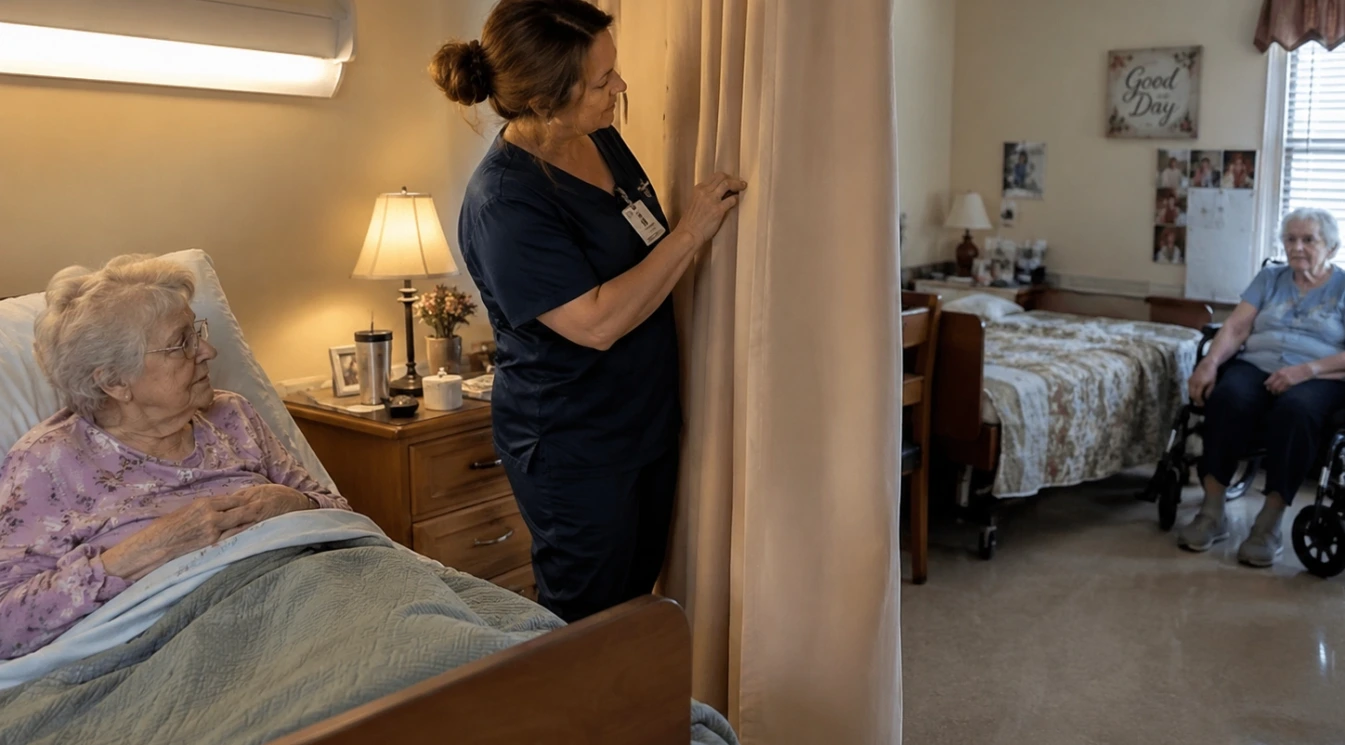
Shared rooms create one of the most important practical problems. A camera positioned to capture one resident may also record a roommate sleeping, dressing, receiving medical treatment, speaking with family, or interacting with staff.
Because nursing home residents have independent privacy rights, a roommate’s position can be important when the roommate may appear in the recording. In its January 2026 guidance, California Advocates for Nursing Home Reform recommends that roommates be aware of and consent to the possibility of being recorded, with the camera aimed only at the consenting resident’s living space when possible.
A roommate’s position can also change over time. A new roommate may not agree to the same arrangement. Room changes, bed positioning, privacy curtains, or changes in the camera’s field of view may require the setup to be reconsidered.
Camera Placement Matters
Even when a resident wants video monitoring, the location and angle of the camera can make a significant difference. A device aimed narrowly at the resident’s bed and immediate living area raises different concerns from a camera that records the entire shared room, bathroom entrance, doorway, or neighboring bed.
Practical questions may include:
- Does the camera record only the resident who agreed to monitoring?
- Can a roommate or visitor be captured in the field of view?
- Does the camera record audio?
- Can the microphone be disabled independently?
- Does the camera capture bathing, toileting, dressing, or medical treatment?
- Who can view the live feed or stored recordings?
- Is the video stored locally, in the cloud, or by a third-party service?
- How long is footage retained?
- Can the camera be temporarily turned off or redirected when privacy is needed?
A camera that is technically easy to install can create complicated privacy issues if those questions are not considered.
What If the Nursing Home Has a No-Camera Policy?
Some facilities may have written policies restricting or prohibiting resident-installed surveillance cameras. A facility policy does not necessarily answer every legal question by itself. In a skilled nursing facility, the resident’s rights to privacy, personal possessions, dignity, and self-determination can also be relevant.
California Advocates for Nursing Home Reform states that a skilled nursing facility resident may use a video camera in the resident’s room when the resident consents and any roommate is aware of and consents to possibly being recorded. The organization also noted in its January 2026 guidance that it was not aware of California law, CDPH guidance, or federal guidance specifically addressing residents’ use of video cameras in nursing homes.
That lack of a single camera-specific rule means disputes may turn on several issues at once, including the resident’s preferences, roommate privacy, the facility’s written policy, the device’s field of view, and whether audio is being recorded.
Skilled Nursing Facilities and Assisted Living Are Not the Same
This article focuses primarily on skilled nursing facilities. Assisted living communities and Residential Care Facilities for the Elderly operate under a different California licensing framework.
For that reason, a camera policy or privacy issue involving a skilled nursing facility should not automatically be assumed to apply in the same way to an assisted living or RCFE setting. Questions involving those facilities may require a separate review of their licensing rules and policies.
Can a Camera Be Hidden?
A hidden camera creates additional concerns. Even if the resident agrees to video monitoring, other people entering the room may not know they are being recorded. Secret audio recording can be especially problematic when confidential conversations are captured without all-party consent, and concealed video can still raise privacy concerns of its own.
Concealed recording may also make it harder to address roommate privacy, personal-care privacy, and facility-policy issues. The fact that a device is small enough to hide does not resolve whether recording is lawful or appropriate.
For those reasons, visible video-only monitoring with the resident’s informed agreement and careful attention to other people’s privacy generally presents a different set of issues from secret audio-and-video surveillance.
What If the Camera Captures Possible Abuse or Neglect?
A recording may show rough handling, missed care, an unexplained fall, unsafe transfer practices, long periods without assistance, verbal mistreatment, or another event that raises concern. If a resident appears to be in immediate danger, protecting the resident and obtaining needed medical help is more important than preserving the perfect recording.
Suspected abuse or neglect may also raise reporting issues separate from the camera itself. California’s Long-Term Care Ombudsman Program receives and investigates complaints affecting residents’ health, safety, welfare, and rights. Depending on the circumstances, concerns involving a licensed nursing home may also be reported to the California Department of Public Health or law enforcement.
Our article on nursing home retaliation after a complaint explains why residents and families should be able to raise concerns without discrimination or reprisal.
Preserving Camera Footage Can Matter
Many cameras automatically overwrite older recordings after a limited period. Cloud subscriptions may retain footage for only a certain number of days, while some devices save clips only when motion is detected.
When an important event appears on video, preservation commonly focuses on keeping the original file, retaining available date and time information, avoiding unnecessary editing, and maintaining a separate backup. A short social-media clip may not preserve the same information as the original recording.
Editing footage can also make it harder to understand what occurred immediately before or after an event. Our guide to preserving evidence after suspected nursing home abuse or neglect discusses photographs, records, messages, witness information, and other evidence that can be relevant after a serious incident.
A Camera Does Not Replace Care Planning or Supervision
A room camera may help a family observe what is happening, but it does not replace the nursing home’s responsibility to assess the resident, create an appropriate care plan, provide adequate supervision, respond to call lights, assist with transfers, prevent avoidable injuries, or recognize changes in condition.
The presence of a camera also does not change the facility’s staffing and supervision obligations. Remote family monitoring is not a substitute for the care and observation that the resident’s assessed needs require from facility staff.
Camera footage may identify a problem, but the underlying care issue still needs to be addressed.
Questions Families May Consider Before Installing a Camera
Because the law and facility circumstances can vary, it can be useful to think through the practical issues before installing a device:
- Resident choice
- Does the resident want the camera, and what type of monitoring is acceptable to the resident?
- Roommate privacy
- Will anyone else living in the room appear on camera, and has that person agreed?
- Audio
- Is the microphone disabled, and could confidential conversations otherwise be recorded?
- Field of view
- Can the camera be positioned to monitor only the consenting resident’s space?
- Personal care
- How will privacy be protected during bathing, toileting, dressing, examinations, or treatment?
- Facility policy
- What does the facility’s written policy actually say, and how does the facility explain the reason for any restriction?
- Data security
- Who can access the feed, where recordings are stored, and how long are they retained?
When a Nursing Home Camera Dispute May Need Further Review
A camera dispute can involve more than ownership of the device. Relevant issues may include the resident’s wishes, the roommate’s privacy, whether audio is being recorded, the facility’s written policy, the authority of a resident representative, and what the camera is intended to monitor.
If a camera has captured a serious injury or possible mistreatment, the legal issues may also extend to preservation of evidence, reporting obligations, medical records, and the underlying care provided by the facility.
Newman Law Group represents residents and families in matters involving nursing home abuse and neglect. The firm can review the circumstances surrounding a serious care problem and explain how available evidence may relate to the resident’s rights and potential claims.
Contact Newman Law Group to discuss a serious nursing home abuse or neglect concern, or call 9169320397.
This article provides general legal information only and is not legal advice for a particular person, recording, or facility. Privacy and recording laws are fact-specific, and audio recording can raise different issues from video-only monitoring.